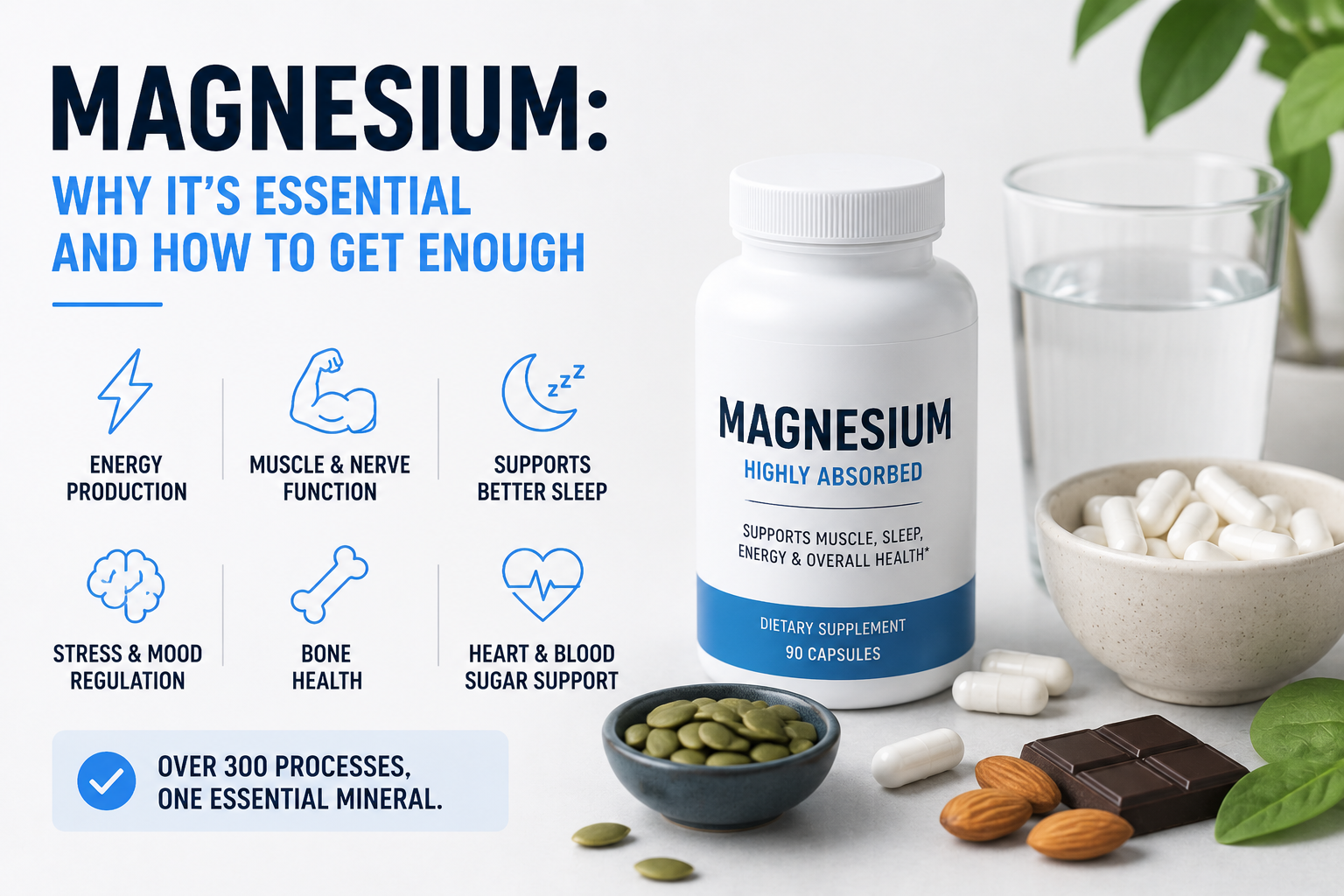
Magnesium: Why It’s Essential and How to Get Enough
Magnesium is involved in over 300 enzymatic processes in your body from energy production and muscle contraction to sleep quality and stress regulation. Despite being one of the most important minerals, deficiency is extremely common. This guide explains what magnesium does, who needs it, and how to choose the right form.
What Does Magnesium Do?
Magnesium plays a central role in a surprisingly wide range of bodily functions:
- Energy production: Required for the production of ATP, your body’s primary energy molecule
- Muscle function: Regulates muscle contraction and relaxation including your heart muscle
- Nervous system: Supports nerve signal transmission and helps regulate the stress response
- Sleep: Activates the parasympathetic nervous system and regulates melatonin production
- Bone health: About 60% of your body’s magnesium is stored in bone
- Blood sugar regulation: Supports insulin sensitivity and glucose metabolism
- Protein synthesis: Required for DNA replication and protein production
Given this range, it’s not surprising that low magnesium levels can affect how you feel in multiple ways energy, sleep, mood, and recovery can all suffer.
How Common Is Magnesium Deficiency?
Studies suggest that a significant portion of the population in Western countries doesn’t get enough magnesium from food. Estimates vary, but figures of 50-60% falling below recommended daily intake are commonly cited in nutritional research.
Several factors make deficiency more likely:
- Modern soil depletion has reduced magnesium content in many foods
- Processed foods are largely stripped of magnesium
- High stress increases magnesium excretion
- Intense exercise increases magnesium requirements
- Alcohol and caffeine increase magnesium loss through urine
- Certain medications (diuretics, PPIs) deplete magnesium
You can have low magnesium without it showing up on a standard blood test most magnesium is stored inside cells and in bone, not in the bloodstream.
Signs You Might Be Low in Magnesium
Symptoms of low magnesium are non-specific, which is partly why it often goes unrecognised:
- Muscle cramps or twitches (particularly at night)
- Poor sleep or difficulty falling asleep
- Fatigue and low energy
- Anxiety or heightened stress response
- Headaches or migraines
- Constipation
- Heart palpitations
None of these symptoms alone confirm deficiency, but a combination especially if you’re in a high-risk group makes supplementation worth trying.
Forms of Magnesium: Which One Is Right for You?
This is where most people get confused. There are many forms of magnesium supplements, and they differ significantly in absorption, side effects, and what they’re best used for.
Magnesium Glycinate
Magnesium bound to glycine, an amino acid with calming properties. Highly bioavailable, gentle on the stomach, and well-suited for sleep support and anxiety reduction. The best all-round choice for most people.
Magnesium Citrate
Magnesium bound to citric acid. Good bioavailability and widely available. Has a mild laxative effect at higher doses, which makes it useful for constipation but less ideal if you’re sensitive to this.
Magnesium Malate
Magnesium bound to malic acid, which is involved in energy production. A good choice for people focused on energy and exercise performance. Generally well-tolerated.
Magnesium Oxide
The cheapest and most common form in low-quality supplements. Poor bioavailability most of it passes through your digestive system without being absorbed. Has a strong laxative effect. Avoid this form if you’re supplementing for systemic benefits.
Magnesium L-Threonate
A newer form that crosses the blood-brain barrier more effectively than other forms. Specifically studied for cognitive benefits and brain health. Significantly more expensive than other forms.
Magnesium Chloride
Often used topically (magnesium oil, bath flakes). Evidence for transdermal absorption is limited, but many people report improved muscle recovery and relaxation with topical use.
How Much Magnesium Do You Need?
General recommended daily intake:
- Adult men: 400-420 mg per day
- Adult women: 310-320 mg per day
- Pregnant women: 350-360 mg per day
Athletes and people under high stress may benefit from higher intakes. Typical supplemental doses range from 200-400 mg per day of elemental magnesium. Start low and increase gradually to assess tolerance.
Magnesium and Sleep
One of the most popular reasons people take magnesium is to improve sleep. There’s reasonable evidence behind this: magnesium regulates neurotransmitters involved in sleep (GABA) and influences melatonin production.
Studies show that magnesium supplementation can improve sleep quality, particularly in older adults and people with low baseline magnesium. Magnesium glycinate is the most commonly recommended form for sleep, taken 30-60 minutes before bed.
Magnesium for Athletes
Exercise increases magnesium requirements by 10-20%. Sweat losses and increased urinary excretion both contribute. Athletes who are slightly low in magnesium may experience:
- Reduced exercise efficiency
- Muscle cramps and increased recovery time
- Poorer sleep quality, which impairs recovery
Supplementing magnesium can help maintain performance and support recovery, particularly during periods of high training volume.
Food Sources of Magnesium
Before reaching for a supplement, it’s worth knowing which foods are rich in magnesium:
- Pumpkin seeds: 150mg per 30g serving
- Dark chocolate (70%+): 65mg per 30g
- Almonds: 80mg per 30g
- Spinach (cooked): 78mg per 100g
- Black beans: 60mg per 100g
- Avocado: 29mg per 100g
- Salmon: 27mg per 100g
A varied diet rich in whole foods can cover a significant portion of your needs. Supplementation fills the gap.
Magnesium and Stress
There’s a two-way relationship between magnesium and stress. Chronic stress increases magnesium excretion through urine, lowering your body’s stores. At the same time, low magnesium makes the stress response more intense your nervous system becomes more reactive to perceived threats.
This creates a cycle that many people are stuck in without realising it. Supplementing magnesium can help break that cycle by supporting the parasympathetic nervous system the “rest and digest” counterpart to the stress response.
Frequently Asked Questions
Can I take magnesium every day?
Yes. Daily supplementation is safe and often recommended, particularly if your diet is low in magnesium-rich foods. There’s no evidence of harm from long-term daily use at recommended doses.
When is the best time to take magnesium?
For sleep support: 30-60 minutes before bed. For general health: any time of day with food to reduce the chance of stomach upset.
Does magnesium interact with other supplements?
Magnesium can compete with calcium for absorption when taken at the same time in high doses. Space them apart if you take both. Magnesium works synergistically with vitamin D and vitamin B6.
Will magnesium make me tired?
Magnesium glycinate can have a calming effect. If you take it during the day and find it makes you sleepy, switch to taking it in the evening.
Bottom Line
Magnesium is one of the most important minerals for overall health, and deficiency is common enough that supplementation makes sense for many people — particularly those under stress, training hard, or not eating a varied diet rich in whole foods.
Choose magnesium glycinate or citrate for best absorption. Start with 200mg and adjust from there. For sleep specifically, glycinate taken before bed is your best bet.
For a full breakdown of the research, visit the magnesium research summary on Examine.com.
Compare magnesium supplements on price and quality at BestSupplements4U.
Attractive section of content I just stumbled upon your blog and in accession capital to assert that I get actually enjoyed account your blog posts Anyway I will be subscribing to your augment and even I achievement you access consistently fast
I just like the helpful information you provide in your articles
Hi there to all, for the reason that I am genuinely keen of reading this website’s post to be updated on a regular basis. It carries pleasant stuff.
Pretty! This has been a really wonderful post. Many thanks for providing these details.
This is really interesting, You’re a very skilled blogger. I’ve joined your feed and look forward to seeking more of your magnificent post. Also, I’ve shared your site in my social networks!
I like the efforts you have put in this, regards for all the great content.
Great information shared.. really enjoyed reading this post thank you author for sharing this post .. appreciated
This is really interesting, You’re a very skilled blogger. I’ve joined your feed and look forward to seeking more of your magnificent post. Also, I’ve shared your site in my social networks!
Great information shared.. really enjoyed reading this post thank you author for sharing this post .. appreciated