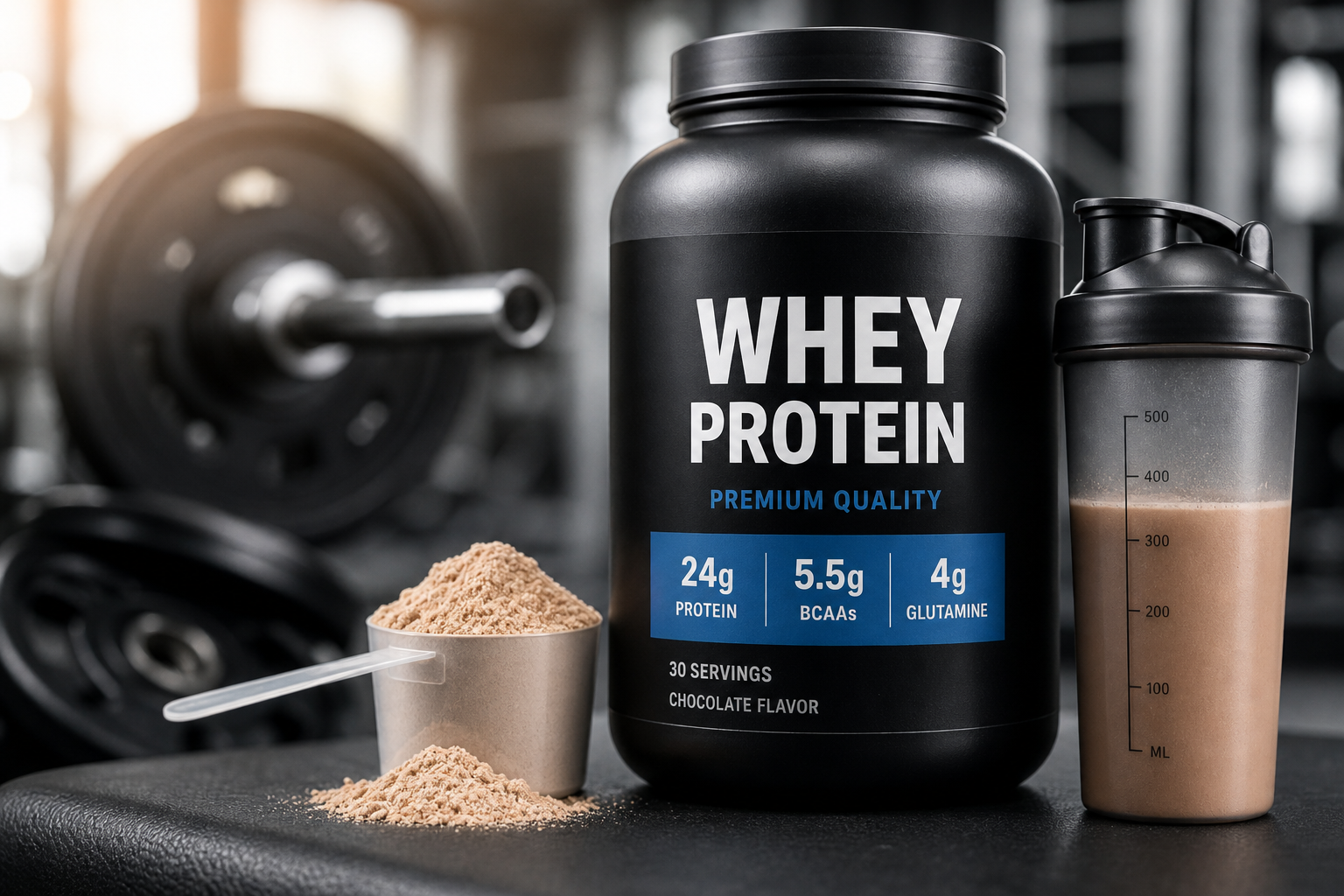
Best Whey Protein of 2026: Reviewed & Compared
Whether you want to build muscle, recover faster, or simply hit your daily protein targets, whey protein is one of the most researched and effective supplements you can take. Finding the best whey protein for your needs comes down to three things: protein percentage, ingredient quality, and price per serving.But with hundreds of products on the market, choosing the right one is easier said than done. In this guide we break down everything you need to know what whey protein actually is, which type suits your goal, and what to look for on the label so you can make an informed choice without wasting money.
What Is Whey Protein?
Whey is a by-product of cheese production. When milk is curdled, it separates into curds (used for cheese) and a liquid called whey. That liquid is then filtered, dried, and processed into the powder you find in supplement stores. It is a complete protein, meaning it contains all nine essential amino acids your body cannot produce on its own. It is also particularly rich in leucine the amino acid that triggers muscle protein synthesis most effectively.
The 3 Types of Whey Protein
1. Whey Concentrate (WPC)
The least processed form. Typically contains 70–80% protein per serving, with small amounts of lactose and fat remaining. It is the most affordable option and has a creamy, rich taste. Good for most people who are not lactose intolerant.
2. Whey Isolate (WPI)
Further filtered to remove most of the lactose and fat. Protein content is usually 90%+ per serving. It mixes cleaner, is lower in calories, and is a better option if you are lactose sensitive or cutting calories. Slightly more expensive than concentrate.
3. Whey Hydrolysate (WPH)
Pre-digested for the fastest absorption. The proteins are partially broken down into smaller peptides, which can be useful immediately post-workout. It is the most expensive type and tends to taste more bitter. Beneficial mainly for competitive athletes. For most people training 3–5 times per week, whey concentrate or isolate will deliver the best value for money.
Key Benefits of Whey Protein
- Supports muscle growth multiple studies confirm whey increases muscle protein synthesis more than other protein sources.
- Speeds up recovery helps repair micro-tears in muscle tissue after training.
- Convenient easy to prepare and carry, making it simple to hit your daily protein target.
- Satiating protein is the most filling macronutrient, which can help with appetite control.
- Versatile works well in shakes, oats, smoothies, and baking.
For a full overview of the research, see the whey protein summary on Examine.com.
How Much Whey Protein Do You Need?
Research suggests 1.6–2.2g of protein per kilogram of bodyweight per day is sufficient for most people who train regularly. If you struggle to hit that through whole foods alone, one or two scoops of whey protein per day can close the gap. There is no benefit to consuming more than your daily protein target. More is not better once your needs are met.
How to choose the best Whey Protein
Protein per serving
Aim for at least 20–25g of actual protein per serving. Watch out for “protein spiking” where cheap amino acids like glycine or taurine inflate the protein number on the label without providing the same muscle-building benefits.
Ingredients list
The shorter the better. Whey (concentrate or isolate), flavouring, and a sweetener is all you need. Avoid products loaded with fillers, artificial colours, or excessive additives.
Sugar and calories
Check the macros against your goal. If you are cutting, an isolate with under 120 kcal per serving is sensible. If you are bulking, a concentrate with slightly more carbs and fat is fine.
Third-party testing
Look for products certified by Informed Sport, NSF Certified for Sport, or Labdoor. These independently verify that what is on the label is actually in the product important if you compete in tested sports.
Price per gram of protein
Divide the total protein grams in the tub by the price. This gives you the true cost-per-gram and makes it easy to compare products fairly.
How to Take Whey Protein
- Mix one scoop (typically 25–30g) with 200–300ml of water or milk.
- Timing is flexible post-workout, between meals, or before bed all work. Total daily intake matters more than exact timing.
- If you are lactose intolerant, choose a whey isolate or a plant-based alternative.
- Do not replace whole meals use whey to supplement your diet, not replace it.
Compare Whey Proteins Side by Side
Not sure which product is right for you? Use our supplement comparison tool to filter by price per serving, protein percentage, brand, and score all in one place.
Frequently Asked Questions
Is whey protein safe?
Yes. Whey protein is derived from food (milk) and is considered safe for healthy adults. People with a milk allergy (not lactose intolerance) should avoid it.
Can I take whey protein if I am lactose intolerant?
Whey isolate contains very little lactose and is well tolerated by most lactose-intolerant people. If you are sensitive, start with a small amount and see how you respond.
Does whey protein cause weight gain?
Protein itself does not cause fat gain. Like any food, consuming more calories than you burn leads to weight gain. Whey protein helps you hit your protein target without excess calories especially with a low-calorie isolate.
When is the best time to take whey protein?
Any time that fits your routine. Post-workout is popular because it is convenient, but research shows that total daily protein intake is more important than exact timing for most people.
Last updated: May 2026 · bestsupplements4u.com