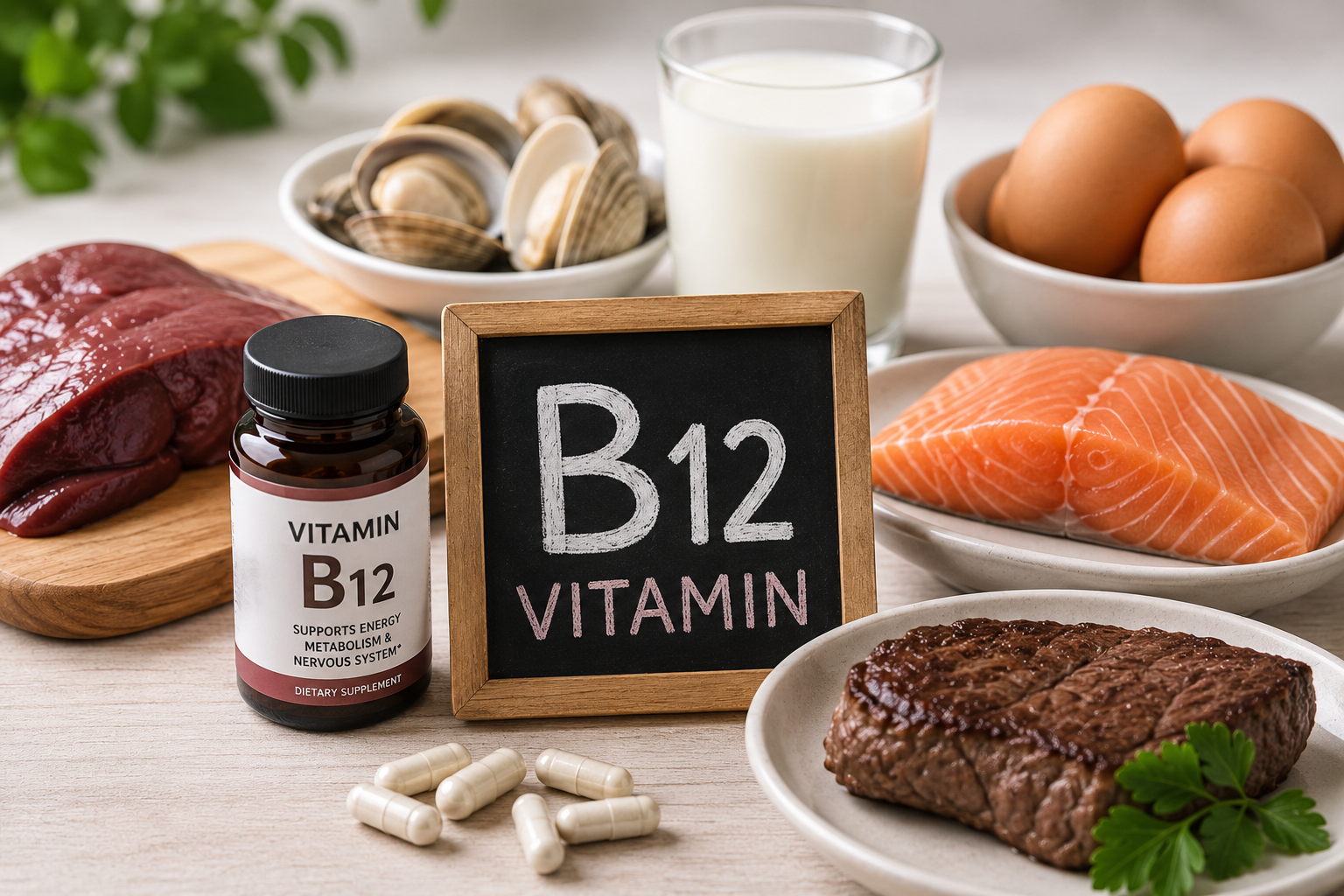
Vitamin B12 deficiency is one of the most common and underdiagnosed nutritional deficiencies worldwide. The symptoms develop gradually, they’re easy to attribute to stress or aging, and by the time neurological symptoms appear, damage may already be underway.
Here’s what vitamin B12 does, who is most at risk, and how to supplement correctly.
5 Key Benefits of Vitamin B12
- Nervous system protection: Vitamin B12 is essential for maintaining myelin, the protective sheath around nerve fibers. Without adequate vitamin B12, nerves degrade starting as tingling and numbness, progressing to balance problems and cognitive decline.
- Red blood cell formation: Vitamin B12 works with folate to synthesize DNA in red blood cells. Vitamin B12 deficiency causes megaloblastic anemia large, abnormal red blood cells that carry oxygen poorly.
- DNA synthesis: Vitamin B12 is required for the replication of every cell. Deficiency impairs cell division, affecting rapidly dividing tissues like the gut lining and bone marrow first.
- Homocysteine metabolism: Vitamin B12 converts homocysteine to methionine. Elevated homocysteine is an independent risk factor for cardiovascular disease and cognitive decline.
- Energy metabolism: Vitamin B12 is involved in converting food into usable energy. Fatigue and weakness are among the first symptoms of vitamin B12 deficiency, partly through its link to anemia.
Source: NIH Office of Dietary Supplements Vitamin B12 Fact Sheet
Who Is at Risk of Vitamin B12 Deficiency
Vegans and Strict Vegetarians
Vitamin B12 is found almost exclusively in animal products. There is no reliable plant source. Every vegan and strict vegetarian needs to supplement vitamin B12 or eat B12-fortified foods consistently.
Adults Over 50
Stomach acid production declines with age, reducing vitamin B12 absorption from food. Vitamin B12 from supplements doesn’t require this process and is absorbed independently making supplementation important for older adults.
People Taking Metformin or Proton Pump Inhibitors
Metformin (a common diabetes medication) reduces vitamin B12 absorption over time. Acid-suppressing medications (PPIs) used long-term also meaningfully increase vitamin B12 deficiency risk.
Symptoms of Vitamin B12 Deficiency
- Fatigue and weakness
- Tingling or numbness in hands and feet
- Balance and coordination problems
- Memory problems and brain fog
- Depression or mood changes
- Pale or yellowish skin
Neurological symptoms can appear before blood vitamin B12 levels drop to clinically deficient levels. Measuring methylmalonic acid (MMA) gives a more accurate picture of functional vitamin B12 status than serum B12 alone.
Best Food Sources of Vitamin B12
| Food | B12 per serving |
| Clams (85g) | 84.1 mcg |
| Beef liver (85g) | 70.7 mcg |
| Salmon (85g, cooked) | 4.9 mcg |
| Beef (85g, cooked) | 1.4 mcg |
| Milk (1 cup) | 1.2 mcg |
| Egg (1 large) | 0.6 mcg |
The RDA for vitamin B12 is 2.4 mcg per day for adults. This is low relative to amounts in animal foods, which is why deficiency from diet alone is uncommon in regular meat eaters.
How to Supplement Vitamin B12
Form: Both cyanocobalamin and methylcobalamin are effective forms of vitamin B12. Cyanocobalamin is the most studied form and is used in most research.
Dose for vegans: 250–2,500 mcg vitamin B12 per day. 250 mcg daily is generally sufficient.
Dose for adults over 50: 500–1,000 mcg vitamin B12 daily. At these doses, passive absorption bypasses the intrinsic factor requirement.
Ready to find the best vitamin B12 supplement? Compare top-rated options, read real reviews, and find the right product for your goals. Compare supplements now.
The Bottom Line
Vitamin B12 is non-negotiable for vegans and vegetarians, and should be on the radar for anyone over 50 or taking medications that affect stomach acid. It’s inexpensive, safe at high doses, and the cost of missing it irreversible nerve damage is too high to ignore.
Frequently Asked Questions
Can vitamin B12 deficiency be reversed?
Anemia and most biochemical markers reverse with adequate supplementation. Neurological damage from prolonged deficiency may partially or fully reverse, but severe or long-standing nerve damage may be permanent. Early detection matters.
Is B12 energy supplement marketing accurate?
In people who aren’t deficient, vitamin B12 supplementation doesn’t boost energy. The energy benefit is real only when fatigue is caused by B12 deficiency. Adding vitamin B12 to an already replete person doesn’t provide extra energy.
Can you get vitamin B12 from nutritional yeast?
Only if it’s fortified. Nutritional yeast doesn’t naturally contain vitamin B12. Fortified versions provide meaningful amounts, but check the label to verify the fortification level.
How long does it take for vitamin B12 supplementation to work?
Blood markers typically normalize within 2–3 months of adequate supplementation. Fatigue often improves within weeks. Neurological symptoms may take 6–12 months to fully resolve.
What’s the difference between cyanocobalamin and methylcobalamin?
Both are effective forms of vitamin B12. Cyanocobalamin is the most studied and used in most clinical research. Methylcobalamin is marketed as more natural and bioactive, but evidence doesn’t consistently show clinical superiority for most people.