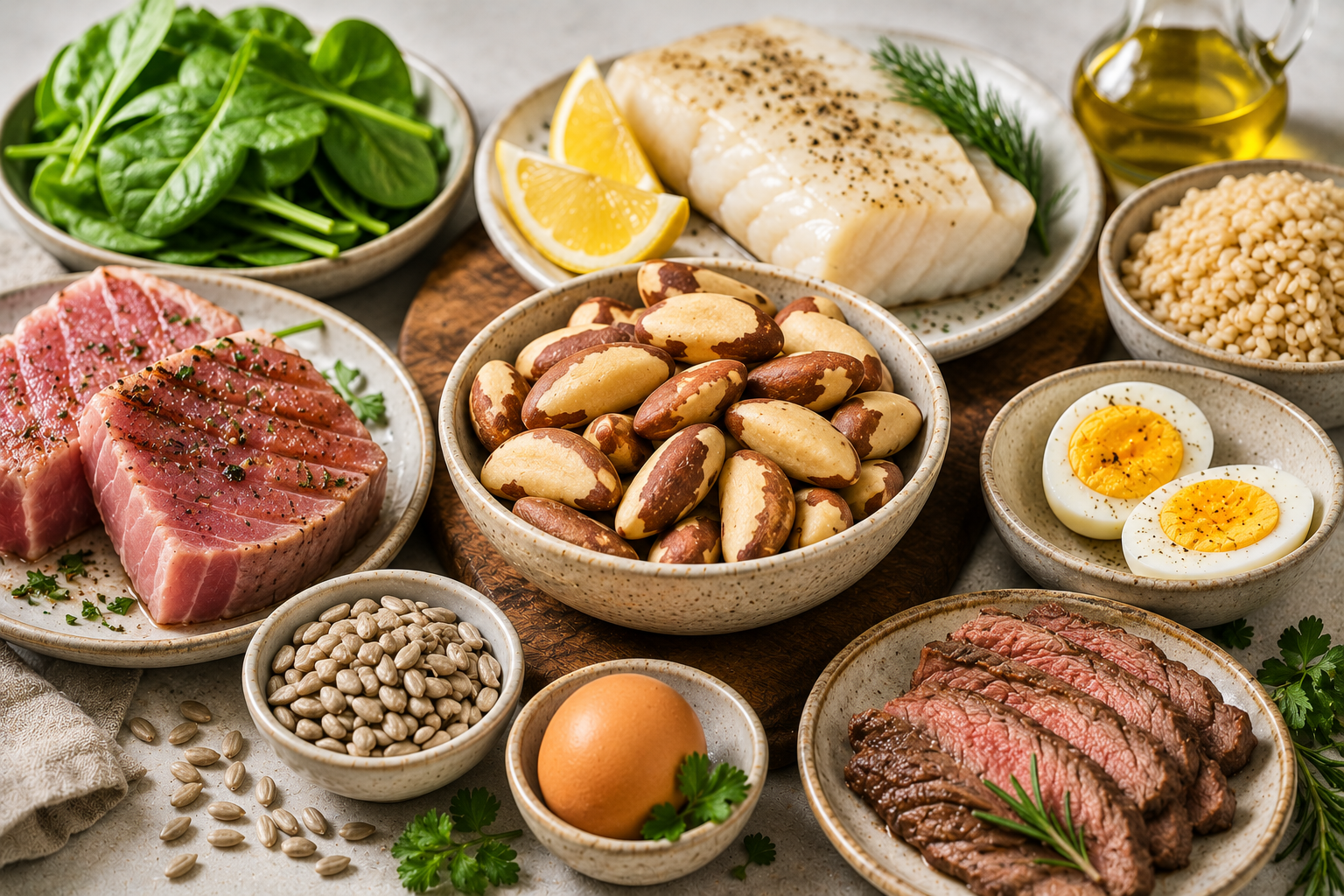
Selenium is a trace mineral with an unusually narrow window between deficiency and toxicity. Most people get adequate selenium from diet, but significant portions of the world’s population are selenium-deficient due to low soil selenium content and the effects on thyroid function, immune defense, and reproductive health are substantial.
What Selenium Does
Selenium’s functions are mediated through selenoproteins proteins that require selenium for their structure and activity. There are 25 known human selenoproteins. The most important:
Glutathione peroxidases: Reduce oxidative stress by breaking down hydrogen peroxide and lipid peroxides.
Iodothyronine deiodinases: Convert the inactive thyroid hormone T4 to the active form T3. Without adequate selenium, thyroid hormone activation is impaired even when iodine and thyroid function are otherwise normal.
Thioredoxin reductases: Regulate cellular redox balance and support DNA repair.
Immune function: Selenium deficiency impairs T-cell proliferation and NK cell activity.
Male fertility: Selenoprotein in sperm mitochondrial capsules is required for sperm motility and structural integrity.
Source: NIH Office of Dietary Supplements Selenium Fact Sheet
Selenium Deficiency and Toxicity
Selenium deficiency causes Keshan disease (cardiomyopathy) and thyroid dysfunction, seen primarily in parts of China, Europe, and New Zealand with selenium-poor soils.
Selenium toxicity (selenosis) causes hair and nail loss, GI distress, fatigue, nerve damage, and a distinctive garlic-like breath odor. The upper limit is 400 mcg/day unusually close to typical dietary intake in high-selenium populations.
Unlike most minerals, ‘more selenium is better’ is definitely wrong.
Best Food Sources of Selenium
| Food | Selenium per serving |
| Brazil nut (1 nut) | 68–91 mcg |
| Tuna (85g, cooked) | 92 mcg |
| Halibut (85g) | 47 mcg |
| Beef (85g) | 33 mcg |
| Egg (1 large) | 15 mcg |
| Sunflower seeds (28g) | 11 mcg |
The RDA for selenium is 55 mcg/day for adults. One to two Brazil nuts daily provides the full selenium RDA from food alone.
Should You Take a Selenium Supplement
For most people in high-selenium regions (North America, Japan), diet provides adequate selenium.
Groups that may benefit from selenium supplementation:
- People with Hashimoto’s thyroiditis selenium at 200 mcg/day has shown benefit in reducing thyroid antibodies in multiple trials
- People in selenium-deficient regions (parts of Europe, UK, Scandinavia, parts of New Zealand)
- Critically ill patients selenium status declines rapidly with illness
Form: Selenomethionine (organic form) is more bioavailable than inorganic forms. Most quality selenium supplements use selenomethionine.
Dose: 100–200 mcg/day for targeted health outcomes. Do not exceed 400 mcg/day from all sources combined.
Ready to find the best selenium supplement? Compare top-rated options, read real reviews, and find the right product for your goals. Compare supplements now.
The Bottom Line
Selenium is essential, and deficiency is more common than recognized in certain regions. For thyroid health and antioxidant function, it’s a meaningful nutrient. But it requires respect stay within the recommended range, and consider whether one or two Brazil nuts daily might be the simplest approach to meeting selenium requirements.
Frequently Asked Questions
Can selenium help with thyroid disease?
For Hashimoto’s thyroiditis specifically, there’s consistent trial evidence showing selenium supplementation at 200 mcg/day reduces thyroid peroxidase antibodies and improves quality of life scores. The mechanism involves selenium-dependent antioxidant protection of thyroid tissue.
Is one Brazil nut a day enough selenium?
One Brazil nut provides approximately 68–91 mcg of selenium close to or above the 55 mcg RDA. However, selenium content in Brazil nuts varies widely. Eating two to three Brazil nuts daily is a reliable food-based approach.
Does selenium prevent cancer?
The SELECT trial tested selenium for prostate cancer prevention and found no benefit in fact, trends toward harm at higher intakes. Earlier observational studies had suggested protective associations, but intervention trials have not confirmed these.
What does selenium toxicity feel like?
Early signs include brittle hair and nails, a garlic-like odor on breath and skin, fatigue, and mild GI symptoms. More severe excess causes hair loss, neurological symptoms, and kidney damage. Effects reverse with reduced intake in most cases.
Does selenium interact with iodine?
Yes selenium and iodine interact in thyroid health. Selenium deficiency can worsen the effects of iodine supplementation in some thyroid conditions. If correcting both, address selenium status alongside iodine.