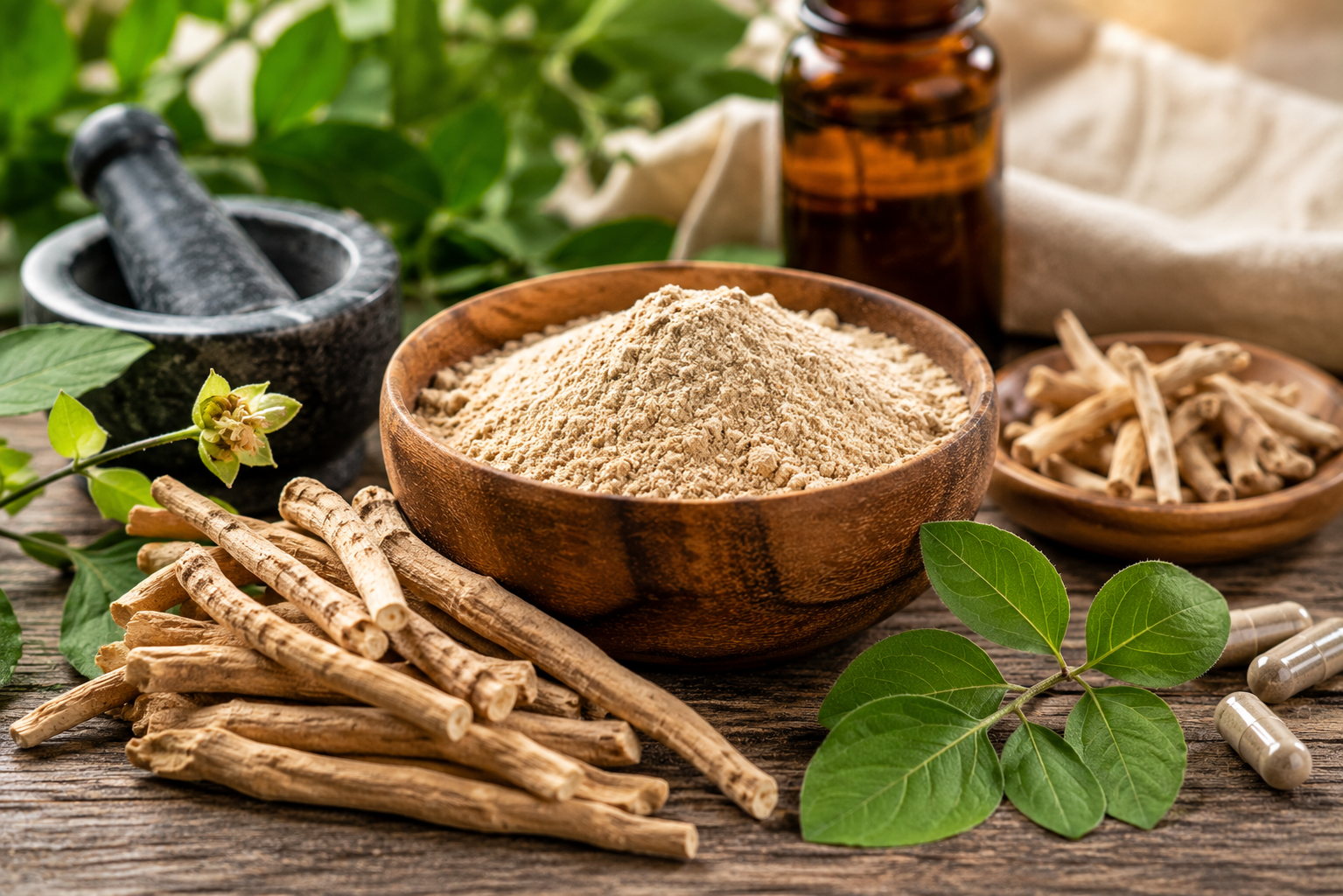
Ashwagandha (Withania somnifera) is an adaptogenic herb that’s been used in Ayurvedic medicine for centuries. It’s also one of the few herbal supplements with enough modern clinical trial data to make specific, evidence-based claims. This separates ashwagandha from most of the supplement category it sits in.
Here are the 5 evidence-based benefits of ashwagandha and what the controlled research actually shows.
What ‘Adaptogen’ Means
An adaptogen is a substance that helps the body resist physical and mental stress. Ashwagandha’s primary mechanisms involve:
- Modulation of the HPA (hypothalamic-pituitary-adrenal) axis, reducing cortisol output
- Anti-inflammatory activity through withanolides (the primary ashwagandha active compounds)
- Potential effects on thyroid hormone, testosterone, and GABA receptors
Source: NIH Office of Dietary Supplements Ashwagandha Fact Sheet
5 Evidence-Based Benefits of Ashwagandha
1. Stress and Cortisol Reduction
The strongest and most consistent ashwagandha evidence. Multiple randomized controlled trials show ashwagandha supplementation (300–600 mg/day of standardized root extract) significantly reduces perceived stress scores and serum cortisol levels in chronically stressed adults. A 2019 study found 240 mg/day of ashwagandha reduced morning cortisol by 23%.
2. Anxiety Reduction
Several trials show meaningful reductions in anxiety scores with ashwagandha versus placebo. Effect sizes are moderate and consistent. Ashwagandha is not a replacement for clinical anxiety treatment, but the evidence is solid.
3. Sleep Quality
Multiple trials show improved sleep onset latency and sleep quality with ashwagandha at 300–600 mg/day. A 2021 trial specifically in people with insomnia showed significant improvements in sleep efficiency and quality with ashwagandha supplementation.
4. Testosterone and Male Reproductive Health
Several studies show ashwagandha supplementation increases testosterone and improves sperm quality in men with stress, infertility, or low testosterone. A 2019 trial in resistance-trained men showed a 15% increase in testosterone over 8 weeks. These ashwagandha effects are most consistent in men with low baseline testosterone or high stress.
5. Physical Performance
Multiple trials show improvements in VO2 max, muscular strength, and endurance performance with ashwagandha supplementation. Effects are modest but statistically consistent, possibly partly mediated by cortisol reduction and improved recovery.
How to Supplement Ashwagandha
Extract: Look for ashwagandha products standardized to withanolide content (5% withanolides is the common standard). KSM-66 and Sensoril are patented, well-studied ashwagandha extracts with the most consistent research behind them.
Dose: 300–600 mg/day of standardized ashwagandha extract. For sleep, taking the full ashwagandha dose 30–60 minutes before bed may improve sleep benefits.
Duration: Most ashwagandha trials run 8–12 weeks. Benefits build gradually — ashwagandha doesn’t produce noticeable acute effects.
Thyroid precaution: People with hyperthyroidism or taking thyroid medication should consult their doctor before taking ashwagandha.
Ready to find the best ashwagandha supplement? Compare top-rated options, read real reviews, and find the right product for your goals. Compare supplements now.
The Bottom Line
Ashwagandha has the best clinical evidence of any commonly used adaptogenic herb. For stress reduction, cortisol management, sleep quality, and testosterone in stress-affected men, the ashwagandha data is consistent enough to recommend with reasonable confidence. Use a standardized ashwagandha extract (KSM-66 or Sensoril), dose at 300–600 mg/day, and give it 8–12 weeks.
Frequently Asked Questions
How long does ashwagandha take to work?
Stress and sleep benefits from ashwagandha begin showing in some trials within 2–4 weeks. Full effects on cortisol and testosterone tend to take 6–8 weeks. The ashwagandha benefit accumulates with consistent use.
Can ashwagandha be taken long-term?
Safety trials up to 90 days show good ashwagandha tolerability. Many practitioners recommend cycling ashwagandha using for 8–12 weeks, taking a 4-week break, then resuming.
Does ashwagandha increase testosterone in all men?
No. Ashwagandha effects are most consistent in men under chronic stress or with sub-optimal testosterone. In men with normal testosterone and low stress levels, ashwagandha effects are smaller and less consistent.
Can women take ashwagandha?
Yes. Women show similar ashwagandha stress-reduction and sleep benefits as men. Pregnancy is a contraindication ashwagandha has traditionally been used to stimulate uterine contractions and should be avoided during pregnancy.
Are there ashwagandha side effects?
Ashwagandha is generally well-tolerated. The most common side effects are mild GI discomfort, particularly on an empty stomach. Rare cases of liver injury have been reported with high doses or non-standardized ashwagandha products. Use standardized, tested products.