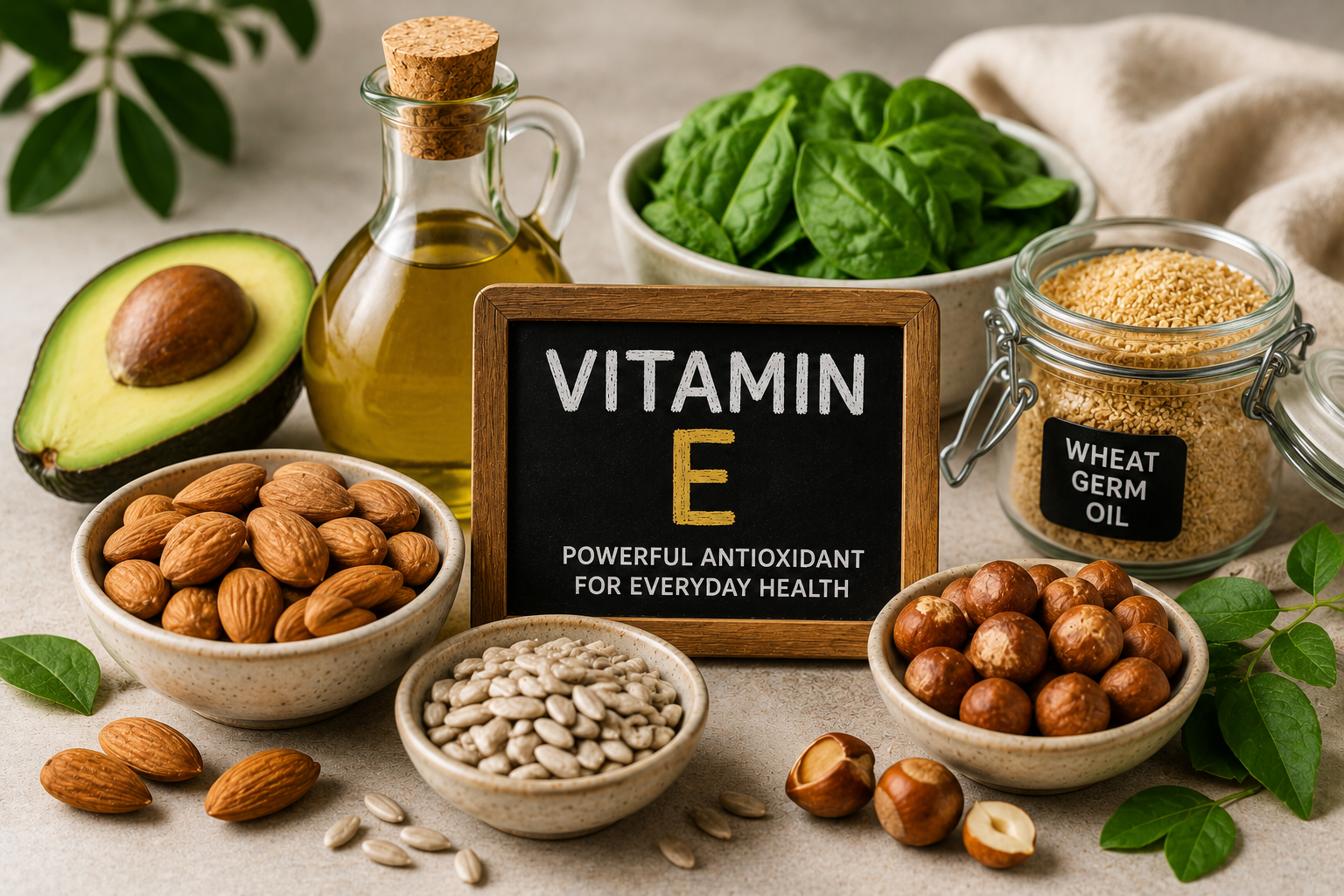
Vitamin E is the body’s primary fat-soluble antioxidant, and it’s also one of the most instructive examples of why ‘more antioxidants is better’ is wrong. High-dose vitamin E supplements have shown neutral or harmful effects in several large clinical trials, while adequate intake from food is consistently associated with health benefits.
What Vitamin E Is
‘Vitamin E’ refers to a family of eight compounds: four tocopherols and four tocotrienols. Alpha-tocopherol is the most biologically active form and the one in most vitamin E supplements. High-dose alpha-tocopherol supplementation actually displaces gamma-tocopherol in the body, which may explain why some trials show negative results.
Key Benefits of Vitamin E
Antioxidant protection: Vitamin E is embedded in cell membranes where it protects polyunsaturated fatty acids from oxidation. This is its primary and most well-established role.
Immune function: Vitamin E supports T-cell proliferation and function. Deficiency impairs immune responses, though isolated vitamin E deficiency from diet alone is rare.
Anti-inflammatory effects: Vitamin E inhibits platelet aggregation and some pro-inflammatory signaling pathways.
Gene expression: Vitamin E influences genes involved in cell proliferation and inflammation, beyond its direct antioxidant activity.
Source: NIH Office of Dietary Supplements Vitamin E Fact Sheet
Vitamin E Deficiency
Isolated vitamin E deficiency from diet is rare in healthy people. It’s primarily seen in conditions causing fat malabsorption: Crohn’s disease, cystic fibrosis, abetalipoproteinemia. Symptoms in severe deficiency include ataxia, peripheral neuropathy, and muscle weakness.
Sub-optimal vitamin E intake is more common, particularly in people with low nut, seed, and vegetable oil intake. Roughly 90% of Americans don’t meet the RDA for vitamin E from food alone.
Best Food Sources of Vitamin E
| Food | Vitamin E per serving |
| Wheat germ oil (1 tbsp) | 20.3 mg |
| Sunflower seeds (28g) | 7.4 mg |
| Almonds (28g) | 6.8 mg |
| Sunflower oil (1 tbsp) | 5.6 mg |
| Hazelnuts (28g) | 4.3 mg |
| Peanut butter (2 tbsp) | 2.9 mg |
The RDA for vitamin E is 15 mg/day of alpha-tocopherol for adults.
Why High-Dose Vitamin E Supplements Backfire
Multiple large clinical trials testing high-dose vitamin E supplementation have shown no benefit and potential harm:
- No reduction in cancer risk (HOPE-TOO trial, SELECT trial)
- No cardiovascular benefit (HOPE trial, GISSI trial)
- A statistically significant increase in all-cause mortality at doses above 400 IU/day (Miller et al. meta-analysis)
- Increased prostate cancer risk at 400 IU/day (SELECT trial)
These findings don’t invalidate dietary vitamin E they specifically challenge high-dose alpha-tocopherol supplementation. The most likely mechanism: high-dose alpha-tocopherol displaces gamma-tocopherol and disrupts the natural balance of the vitamin E family.
Ready to find the best vitamin E supplement? Compare top-rated options, read real reviews, and find the right product for your goals. Compare supplements now.
The Bottom Line
Vitamin E from food is consistently associated with health benefits. High-dose vitamin E supplementation has not shown these benefits in clinical trials and may cause harm at doses above 400 IU/day. Eat nuts, seeds, and vegetable oils for your vitamin E you don’t need a high-dose supplement.
Frequently Asked Questions
Is vitamin E good for skin?
Topically, vitamin E has antioxidant properties and is widely used in skincare. Evidence for topical application is mixed it may help with wound healing and UV damage, but some people develop contact dermatitis. Oral vitamin E hasn’t shown consistent skin benefits in well-designed trials.
Does vitamin E help with muscle soreness?
Some studies suggest vitamin E reduces exercise-induced oxidative stress. However, evidence suggests exercise-induced free radicals play a role in signaling training adaptations. High-dose antioxidant supplementation may actually reduce training adaptations. The current consensus leans against high-dose vitamin E supplementation during training.
What’s the difference between natural and synthetic vitamin E?
Natural vitamin E (d-alpha-tocopherol) has approximately twice the bioavailability of synthetic vitamin E (dl-alpha-tocopherol). Labels showing ‘dl-‘ indicate synthetic form. If supplementing at lower doses, natural form is more efficient gram-for-gram.
Is vitamin E safe during pregnancy?
At dietary levels and standard multivitamin doses, yes. High-dose supplementation above 1,000 mg/day is not recommended during pregnancy and has been associated with adverse birth outcomes in some studies.
Should I take vitamin E with other supplements?
Vitamin E works synergistically with vitamin C vitamin, C regenerates oxidized vitamin E. High-dose vitamin E may reduce the effects of vitamin K and interact with blood-thinning medications. Always check interactions if you’re on anticoagulants.