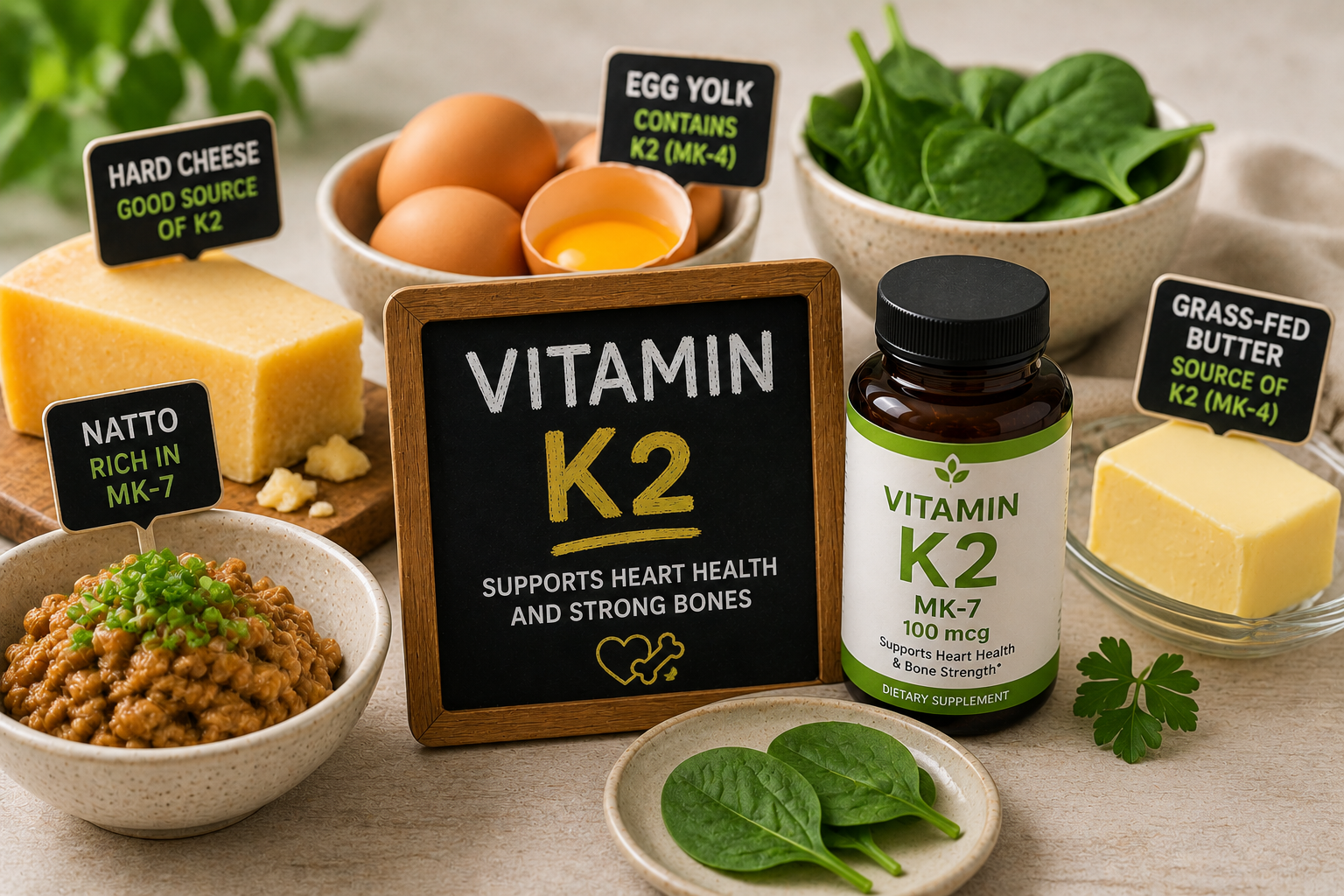
Vitamin K2 doesn’t get the attention it deserves. It sits in the shadow of vitamin K1 which most people associate with blood clotting but vitamin K2 has a distinct set of functions, different food sources, and a clinical relevance that K1 simply doesn’t have for most healthy people.
Here are the 4 evidence-based benefits of vitamin K2 and why it matters, particularly if you’re supplementing vitamin D3.
K1 vs. K2: Why the Distinction Matters
Vitamin K1 (phylloquinone) is found in leafy green vegetables and is primarily used by the liver to produce clotting factors. Most people eating green vegetables get sufficient K1.
Vitamin K2 (menaquinones) is found in fermented foods and certain animal products. It preferentially goes to bones, blood vessels, and soft tissues where it activates proteins that K1 doesn’t effectively reach. The most important form of vitamin K2 for supplementation is MK-7, which has the longest half-life and greatest bioactivity.
4 Evidence-Based Benefits of Vitamin K2
- Bone mineral density: Vitamin K2 activates osteocalcin, a protein produced by bone-building cells. Activated osteocalcin binds calcium and incorporates it into bone matrix. Without vitamin K2, osteocalcin is inactive and calcium doesn’t get properly deposited in bone. Multiple trials show vitamin K2 supplementation reduces bone loss and fracture risk.
- Arterial protection: Vitamin K2 activates Matrix GLA Protein (MGP), the most potent known inhibitor of soft tissue calcification. MGP prevents calcium from depositing in blood vessel walls. Uncarboxylated MGP (inactive, meaning vitamin K2 deficient) is consistently associated with arterial calcification.
- Cardiovascular health: The Rotterdam Study found that higher dietary vitamin K2 intake is associated with reduced coronary calcification and lower cardiovascular mortality. The mechanistic pathway vitamin K2 activating MGP to prevent arterial calcification is well-supported.
- D3 synergy: Vitamin K2 and vitamin D3 work together. Vitamin D3 increases calcium absorption; vitamin K2 ensures that calcium is directed to bones rather than arteries. Without sufficient vitamin K2, high vitamin D3 intake can actually be counterproductive.
Source: NIH Office of Dietary Supplements Vitamin K Fact Sheet
Why Vitamin K2 Deficiency Is Common
The best dietary source of vitamin K2 MK-7 is natto fermented Japanese soybeans. It’s not a staple in most Western diets. Other sources include hard cheeses, gouda, egg yolks, and grass-fed dairy. These foods are present in many diets but rarely in amounts sufficient to fully activate vitamin K2-dependent proteins.
Best Food Sources of Vitamin K2
| Food | K2 content | Form |
| Natto (85g) | 850 mcg | MK-7 |
| Hard cheeses (30g) | 10–20 mcg | MK-4/MK-7 |
| Gouda (30g) | 20 mcg | MK-7 |
| Egg yolk (1) | 5–7 mcg | MK-4 |
| Grass-fed butter (1 tbsp) | 15 mcg | MK-4 |
How to Supplement Vitamin K2
Form: MK-7 is preferred for vitamin K2 supplementation it has a much longer half-life than MK-4 (72+ hours vs. 1–2 hours), meaning once-daily dosing is effective.
Dose: 100–200 mcg vitamin K2 MK-7 per day is the standard supplementation range.
Take with fat: Vitamin K2 is fat-soluble. Absorption increases substantially when taken with a meal containing fat.
Warfarin interaction: People on warfarin should consult their doctor before supplementing vitamin K2, as K vitamins interact with warfarin’s mechanism of action.
Ready to find the best vitamin K2 supplement? Compare top-rated options, read real reviews, and find the right product for your goals. Compare supplements now.
The Bottom Line
Vitamin K2 is one of the most underappreciated supplements. For bone health, arterial health, and as a companion to vitamin D3 supplementation, vitamin K2 MK-7 at 100–200 mcg/day is a low-cost, high-value addition to most people’s routine.
Frequently Asked Questions
Does vitamin K2 interact with blood thinners?
Yes. Vitamin K competes with warfarin’s mechanism of action. People on warfarin should not start vitamin K2 supplementation without medical supervision. Newer anticoagulants like apixaban and rivaroxaban do not interact with vitamin K in the same way.
How long does it take for vitamin K2 to work for bones?
Bone turnover is slow. Studies showing vitamin K2 effects on bone density run over 1–3 years. The cardiovascular effects through MGP activation are more immediate circulating uncarboxylated MGP levels normalize within a few weeks of supplementation.
What’s the difference between MK-4 and MK-7?
MK-7 is the preferred supplemental form of vitamin K2 due to its much longer half-life. MK-4 clears rapidly and requires multiple daily doses. Both activate K2-dependent proteins, but MK-7’s pharmacokinetics make it more practical.
Does vitamin K2 cause blood clotting?
No. Vitamin K2 supports bone and cardiovascular health through osteocalcin and MGP activation, not through blood clotting. Vitamin K1 is the form primarily involved in clotting factor synthesis. At supplementation doses, vitamin K2 doesn’t meaningfully increase clotting risk in healthy people.
Can I get enough vitamin K2 from cheese alone?
Hard cheeses like gouda provide meaningful amounts of vitamin K2, but most Western diets don’t include enough to fully activate K2-dependent proteins. If you don’t eat natto regularly, supplementing vitamin K2 MK-7 is the most reliable approach.