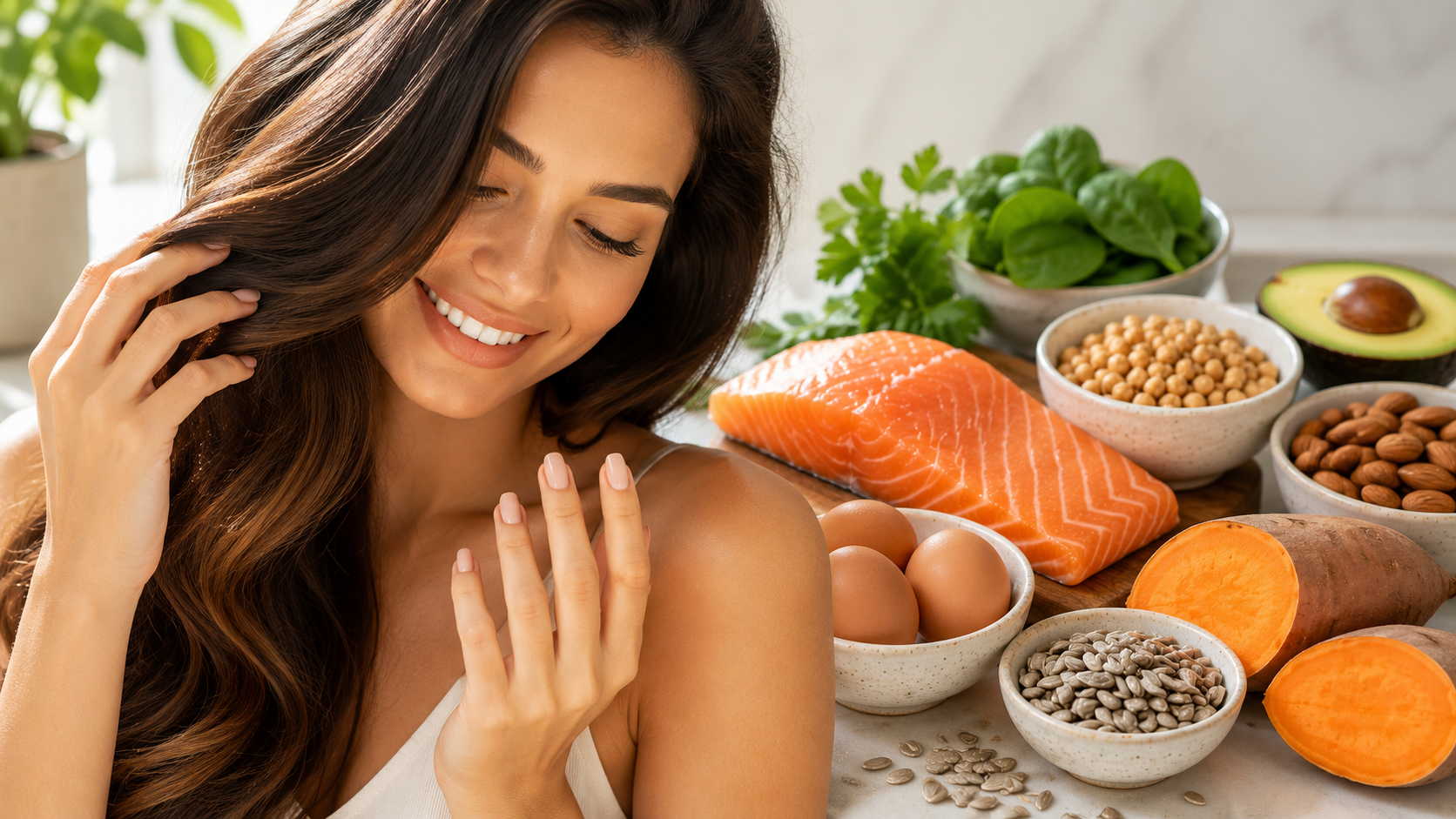
Walk into any pharmacy and you’ll find biotin marketed as the go-to supplement for thicker hair and stronger nails. The reality is more nuanced. Biotin does have important biological functions but most healthy people get enough from food, true biotin deficiency is rare, and the evidence for biotin supplementation in people without deficiency is much weaker than the packaging suggests.
Here’s what the science actually shows about biotin.
What Biotin Does
Carboxylase enzyme function: Biotin is a cofactor for five carboxylase enzymes involved in fatty acid synthesis, amino acid metabolism, and gluconeogenesis. These are fundamental processes affecting how your body uses nutrients from food.
Gene expression: Biotin influences genes involved in glucose metabolism, particularly those related to insulin response.
Keratin production: Biotin is involved in the production of keratin the structural protein making up hair, skin, and nails. This is the basis of hair and nail claims. The mechanism is real. Whether biotin supplementation beyond sufficiency produces cosmetic benefits is a different question.
Source: NIH Office of Dietary Supplements Biotin Fact Sheet
What the Hair and Nail Evidence Actually Shows
There are case reports and small studies showing biotin supplementation improves brittle nails and hair fragility in people who were actually deficient. These are real findings.
What’s absent is well-designed, placebo-controlled evidence showing that biotin supplementation improves hair growth or nail strength in healthy people with normal biotin levels. The supplement market has massively extrapolated from biotin deficiency-correction data to a general ‘hair growth’ claim that doesn’t hold up under scrutiny.
If you’re healthy and eating a varied diet, your biotin status is almost certainly adequate. Adding more biotin doesn’t produce a linear improvement in hair or nails.
Who Is Actually at Risk of Biotin Deficiency
- People with biotinidase deficiency a rare genetic disorder affecting biotin recycling
- People consuming large amounts of raw egg whites avidin in raw egg white binds biotin and blocks absorption
- People on long-term anticonvulsant medications (valproate, carbamazepine)
- Heavy alcohol users alcohol impairs biotin absorption
- Pregnant and breastfeeding women biotin requirements increase
Best Food Sources of Biotin
| Food | Biotin per serving |
| Beef liver (85g) | 30.8 mcg |
| Egg (1 whole, cooked) | 10 mcg |
| Salmon (85g) | 5 mcg |
| Sunflower seeds (28g) | 2.6 mcg |
| Sweet potato (1/2 cup) | 2.4 mcg |
The Adequate Intake (AI) for biotin is 30 mcg/day for adults. Biotin deficiency from diet alone is so rare that a firm RDA is difficult to establish.
Important Warning: Biotin and Lab Tests
High-dose biotin supplementation (10,000+ mcg/day, common in ‘hair, skin and nails’ supplements) can interfere with a wide range of immunoassay-based blood tests. Biotin interference has been documented in troponin tests (used to diagnose heart attacks), thyroid hormone tests, vitamin D tests, and hormone panels.
If you’re taking high-dose biotin and have lab work scheduled, stop supplementation for at least 48–72 hours beforehand and inform your doctor. The FDA issued a safety communication about this in 2017.
Ready to find the best biotin supplement? Compare top-rated options, read real reviews, and find the right product for your goals. Compare supplements now.
The Bottom Line
Biotin is important for metabolism and keratin production, but isolated biotin deficiency in healthy people is rare. The hair and nail benefits have been significantly overstated. If you’re taking high-dose biotin for cosmetic reasons, the most important practical action is informing your healthcare provider high biotin doses interfere with multiple common lab tests.
Frequently Asked Questions
How long does biotin take to work for hair?
Studies reporting hair and nail benefits from biotin supplementation typically observe effects over 3–6 months. Hair growth cycles are slow. If no benefits appear after 3–4 months of consistent supplementation, biotin deficiency likely wasn’t the cause.
Can biotin cause acne?
Possibly. High-dose biotin competes with pantothenic acid (B5) for absorption, and B5 is involved in sebum regulation. Clinical evidence is limited, but acne worsening with high-dose biotin is reported frequently enough to be worth noting.
Is there such a thing as too much biotin?
Biotin has no established toxicity upper limit it’s water-soluble and excess is excreted. The concern with high biotin doses is lab test interference rather than direct toxicity.
Does biotin help with diabetes?
Some research shows biotin plays a role in glucose metabolism and insulin sensitivity. Early studies in diabetic patients showed some glucose-lowering effects. The evidence isn’t strong enough to recommend biotin for blood sugar management, but it’s an area of ongoing research.
Does cooking eggs deactivate the biotin blocker?
Yes. Cooking deactivates avidin in egg whites so the biotin-binding effect that occurs with raw egg whites isn’t a concern for cooked eggs. Cooked eggs are actually a good biotin source.