Folate is one of the B vitamins most people have heard of mainly in the context of pregnancy. But its importance extends well beyond fetal development, and the debate between natural folate and synthetic folic acid is more clinically relevant than most supplement marketing acknowledges.
4 Key Benefits of Folate
- Neural tube development: Folate is required for proper closure of the neural tube in early fetal development, which occurs in the first 4 weeks of pregnancy often before a woman knows she is pregnant. Folate deficiency during this window causes neural tube defects including spina bifida and anencephaly.
- DNA synthesis and cell division: Folate is essential for synthesizing DNA bases. This makes it critical for every dividing cell. Rapidly dividing tissues bone marrow, gut lining, embryonic tissue are most vulnerable to folate deficiency.
- Homocysteine metabolism: Folate (with B12 and B6) converts homocysteine to methionine. Elevated homocysteine is a risk factor for cardiovascular disease, stroke, and cognitive decline. Folate is typically the primary driver of homocysteine reduction.
- Mood support: Folate is involved in the methylation cycle that supports serotonin, dopamine, and norepinephrine production. Low folate is consistently associated with depression, and methylfolate has been used as an adjunct to antidepressant therapy in clinical trials.
Source: NIH Office of Dietary Supplements Folate Fact Sheet
Folate vs. Folic Acid: Why It Matters
Folate is the naturally occurring form found in food. Folic acid is a synthetic oxidized form used in supplements and food fortification. They’re often treated as interchangeable, but they’re not:
- Folic acid must be converted to active 5-methyltetrahydrofolate (5-MTHF) this requires the enzyme MTHFR
- Up to 40% of people have a variant of the MTHFR gene that significantly reduces this conversion efficiency
- High folic acid intake can mask vitamin B12 deficiency it corrects the anemia while neurological damage continues
Methylfolate (5-MTHF), the active form, bypasses this conversion and is effective regardless of genetic variation. It’s the preferred form for anyone with known MTHFR variants and a safer choice for general supplementation.
Who Needs to Pay Attention to Folate
Women of Reproductive Age
Health authorities universally recommend 400–800 mcg of folate or methylfolate daily for all women who could become pregnant. This is one of the most evidence-based public health recommendations in nutrition.
People with Elevated Homocysteine
Combined B9, B12, and B6 supplementation is one of the most effective ways to lower homocysteine. Folate is typically the primary driver.
Heavy Alcohol Users
Alcohol blocks folate absorption and increases excretion. Folate deficiency is common in heavy drinkers.
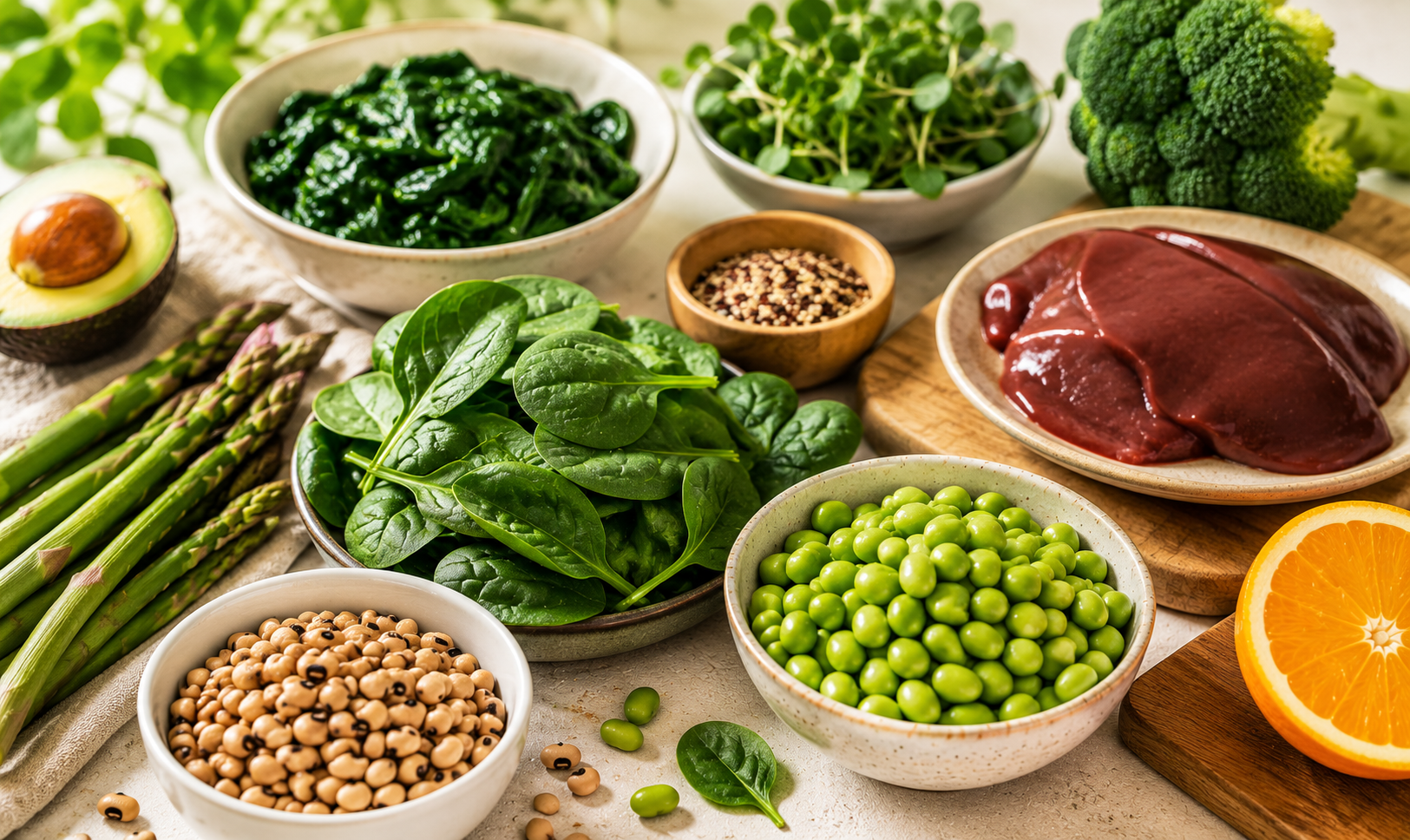
Best Food Sources of Folate
| Food | Folate per serving |
| Edamame (1/2 cup) | 241 mcg DFE |
| Beef liver (85g) | 215 mcg DFE |
| Spinach, cooked (1/2 cup) | 131 mcg DFE |
| Black-eyed peas (1/2 cup) | 105 mcg DFE |
| Asparagus (4 spears) | 89 mcg DFE |
| Avocado (1/2) | 82 mcg DFE |
The RDA for folate is 400 mcg DFE/day for adults, 600 mcg for pregnant women.
Supplementing Folate
For women who may become pregnant: 400–800 mcg methylfolate or folic acid daily, started before conception.
During pregnancy: 600 mcg DFE minimum. Check that your prenatal uses methylfolate rather than synthetic folic acid.
For elevated homocysteine: 400–800 mcg methylfolate daily, combined with B12 and B6.
Upper limit for folic acid: 1,000 mcg/day. This limit applies specifically to synthetic folic acid, not natural folate or methylfolate.
Ready to find the best folate supplement? Compare top-rated options, read real reviews, and find the right product for your goals. Compare supplements now.
The Bottom Line
Folate is essential for anyone planning pregnancy and beneficial for cardiovascular and cognitive health broadly. The form matters: methylfolate is the safer, more universally effective option over synthetic folic acid, especially for people with MTHFR variants.
Frequently Asked Questions
What does folate deficiency look like?
Megaloblastic anemia (large, abnormal red blood cells causing fatigue and weakness), mouth sores, and neural tube defects in pregnancy are the most significant manifestations. Mood changes and cognitive symptoms are also associated with folate deficiency.
Can men benefit from folate supplementation?
Yes. Beyond the pregnancy-specific recommendation, folate plays a role in sperm quality, DNA integrity, cardiovascular health, and mood for men. Men with elevated homocysteine or MTHFR variants benefit from optimizing folate alongside B12.
Is the MTHFR gene variant common?
Yes. The C677T variant is present in roughly 10–15% of people in homozygous form and 40–50% in heterozygous form. If you have this variant, methylfolate supplementation is strongly preferred over synthetic folic acid.
Does folate help with depression?
Observational studies consistently show an association between low folate and depression. Several clinical trials support methylfolate as an adjunct to antidepressant therapy, improving response rates and reducing time to remission.
What food is highest in natural folate?
Leafy green vegetables, legumes, asparagus, and liver are the best sources. Cooking reduces folate content — lightly cooked or raw vegetables preserve more. Fortified grains also contribute significantly in countries with mandatory fortification programs.