Zinc: 6 Benefits, Deficiency Signs, and How Much You Actually Need
Zinc doesn’t get as much attention as vitamin D or magnesium, but it’s involved in over 300 enzymatic reactions and plays a central role in immune defense, testosterone production, wound healing, and sensory function. Sub-optimal zinc intake is more common than most people realize, particularly in athletes and anyone eating a low-meat diet.
6 Key Benefits of Zinc
- Immune defense: Zinc is required for the development and activation of T-lymphocytes and natural killer cells. Even mild zinc deficiency significantly impairs immune responses.
- Testosterone production: Zinc is concentrated in testicular tissue and is required for testosterone biosynthesis. Zinc deficiency lowers testosterone, and supplementation in deficient men consistently restores levels.
- Wound healing: Zinc is essential for collagen synthesis, cell proliferation, and tissue repair. Zinc deficiency prolongs wound healing supplementation in zinc-deficient patients demonstrably speeds recovery.
- Protein synthesis: Zinc is a cofactor in DNA and RNA polymerases. Without adequate zinc, protein synthesis is impaired regardless of amino acid availability.
- Taste and smell: Zinc is required for taste and smell function. Loss of these senses is one of the most specific early signs of zinc deficiency.
- Skin health: Zinc is involved in keratinocyte function and sebum regulation. Low zinc is associated with acne, dermatitis, and impaired skin barrier function.
Source: NIH Office of Dietary Supplements Zinc Fact Sheet
Who Is Most at Risk of Zinc Deficiency
Vegetarians and Vegans
Zinc from plant foods is less bioavailable due to phytates in legumes and whole grains. Plant-based eaters may require 50% more dietary zinc than omnivores to achieve the same zinc status.
Athletes
Zinc is lost through sweat, and intense exercise increases zinc excretion. Athletes in heavy training are at higher risk of sub-optimal zinc status.
Older Adults
Zinc absorption declines with age, and dietary intake often decreases. Studies consistently show higher rates of zinc inadequacy in adults over 60.
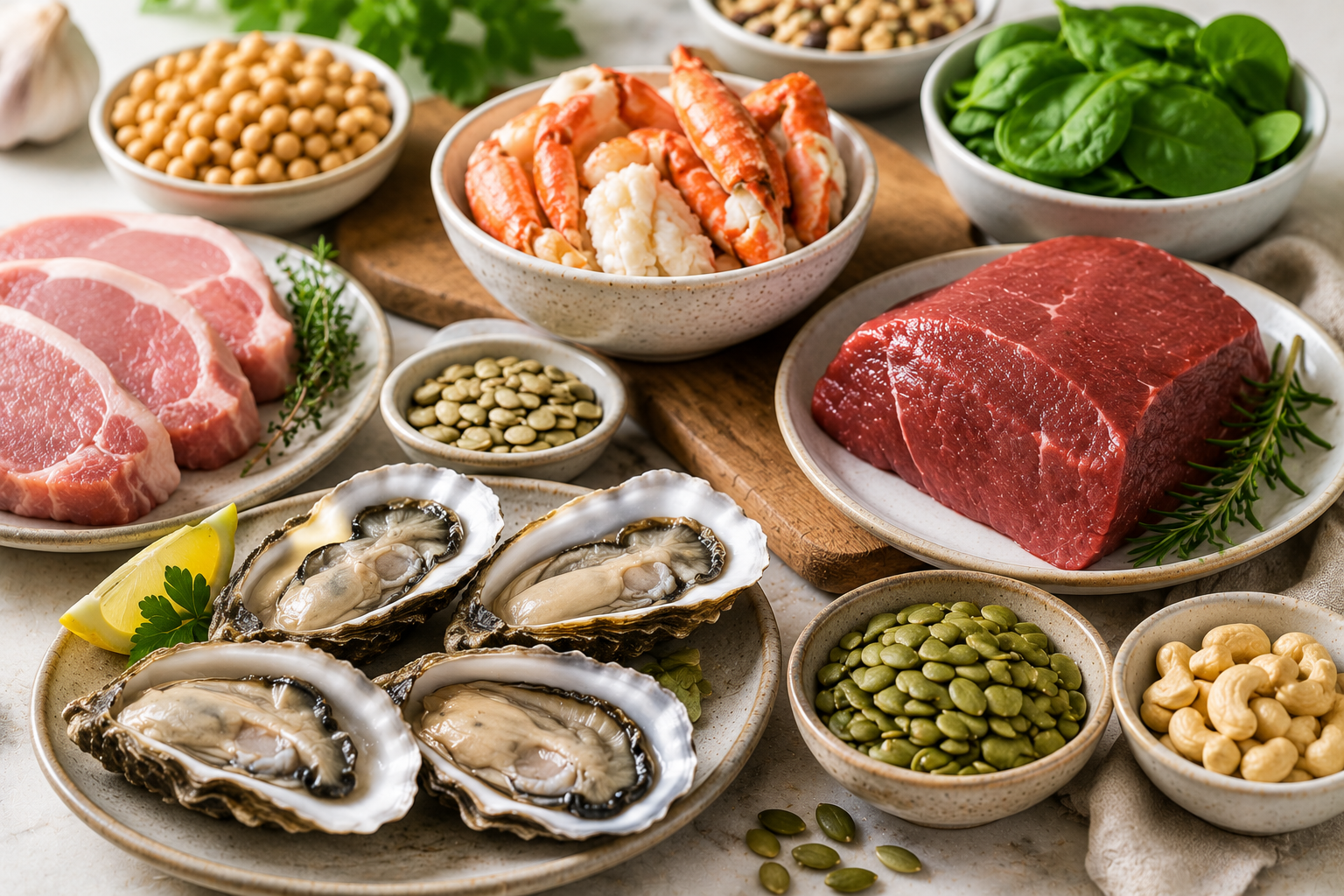
Best Food Sources of Zinc
| Food | Zinc per serving |
| Oysters (85g) | 74 mg |
| Beef (85g, cooked) | 7 mg |
| Crab (85g) | 6.5 mg |
| Pork (85g) | 2.9 mg |
| Pumpkin seeds (28g) | 2.2 mg |
| Cashews (28g) | 1.6 mg |
The RDA for zinc is 8 mg/day for women and 11 mg/day for men. The upper limit is 40 mg/day above this, copper absorption is impaired and immune function can paradoxically decline.
How to Supplement Zinc
Forms: Zinc bisglycinate and zinc picolinate are the most bioavailable forms. Zinc gluconate is commonly used in cold lozenges. Zinc oxide has poor bioavailability.
Dose: 15–30 mg elemental zinc daily. Athletes and plant-based eaters may need 25–40 mg.
With copper: Long-term zinc supplementation above 25 mg/day can deplete copper. Include 1–2 mg of copper per 25–30 mg zinc if supplementing long-term.
Timing: Avoid taking zinc with calcium-rich meals, iron supplements, or high-phytate foods, which all reduce zinc absorption.
Ready to find the best zinc supplement? Compare top-rated options, read real reviews, and find the right product for your goals. Compare supplements now.
The Bottom Line
Zinc is a foundational mineral with genuine, well-documented roles across immunity, hormones, and tissue repair. Sub-optimal zinc status is underdiagnosed, particularly in vegetarians, athletes, and older adults. Supplement at 15–30 mg of a bioavailable form, pair with copper if using long-term, and avoid megadosing.
Frequently Asked Questions
Does zinc help with testosterone?
In men who are zinc-deficient, yes restoring adequate zinc levels raises testosterone toward normal. In men who already have sufficient zinc, supplementation doesn’t produce additional testosterone increases.
Can zinc help with acne?
Zinc is one of the better-evidenced nutritional interventions for acne. Multiple trials show oral zinc (particularly zinc gluconate at 30 mg/day) reduces inflammatory lesions. The effect size is smaller than prescription topicals but larger than most other supplement approaches.
Does zinc interact with other supplements?
Yes. High-dose zinc inhibits copper and iron absorption. Space zinc supplements from iron supplements and calcium-rich meals by at least 2 hours.
How long until zinc supplementation shows results?
Immune response improvements can be noticeable within a few weeks. Testosterone normalization in deficient men typically takes 4–8 weeks. Skin improvements for acne typically take 6–12 weeks.
Does zinc help with colds?
Zinc acetate or gluconate lozenges started within 24 hours of cold symptom onset have the strongest evidence for reducing cold duration. The mechanism involves zinc ions inhibiting viral replication in the nasal passages.